Figma
PowerPoint
2024
Beyond the Benchmark: Turning Competitive Research into Purposeful Design
Duration
4 months
My Role
Associate UX Designer
Team
Project Overview
As the UX lead on a four-person team, I conducted a comprehensive heuristic evaluation across 11 websites for one of the world's largest healthcare manufacturing organizations. Working independently across a UX track alongside Content and UI counterparts, I audited each site by page using a consistent framework to benchmark the client's digital experience against the competitive landscape. Findings were synthesized into a multi-disciplinary presentation delivered to the client, then carried directly into homepage wireframes to ground design decisions in research.
My Role
I served as the UX lead across the entire engagement, owning the full UX heuristic evaluation from start to finish. This meant independently auditing all 11 websites through a UX lens, presenting my findings to the internal team at every stage of the process, and ultimately the complete competitive analysis to the client. Once the research phase wrapped, my role shifted into design, where I led the wireframing of the homepage and collaborated closely with the UI designer and content strategist as the work evolved into high-fidelity screens.
The Challenge
Without a structured way to benchmark their digital experience against competitors, design decisions were being made without evidence. The challenge was to build that framework, execute a thorough audit across 11 sites, and synthesize findings across three disciplines into a cohesive story that could drive real design direction.
The Solution
A rigorously structured, multi-disciplinary audit that gave the client a clear, evidence-based picture of the competitive landscape and a direct path into design. Key outcomes of the research included:
A best-in-class benchmark for UX across the insurance industry
Clear identification of the client's strongest pages and biggest opportunity areas
A shared foundation across Content, UI, and UX that aligned the team before a single design decision was made
Research and Process
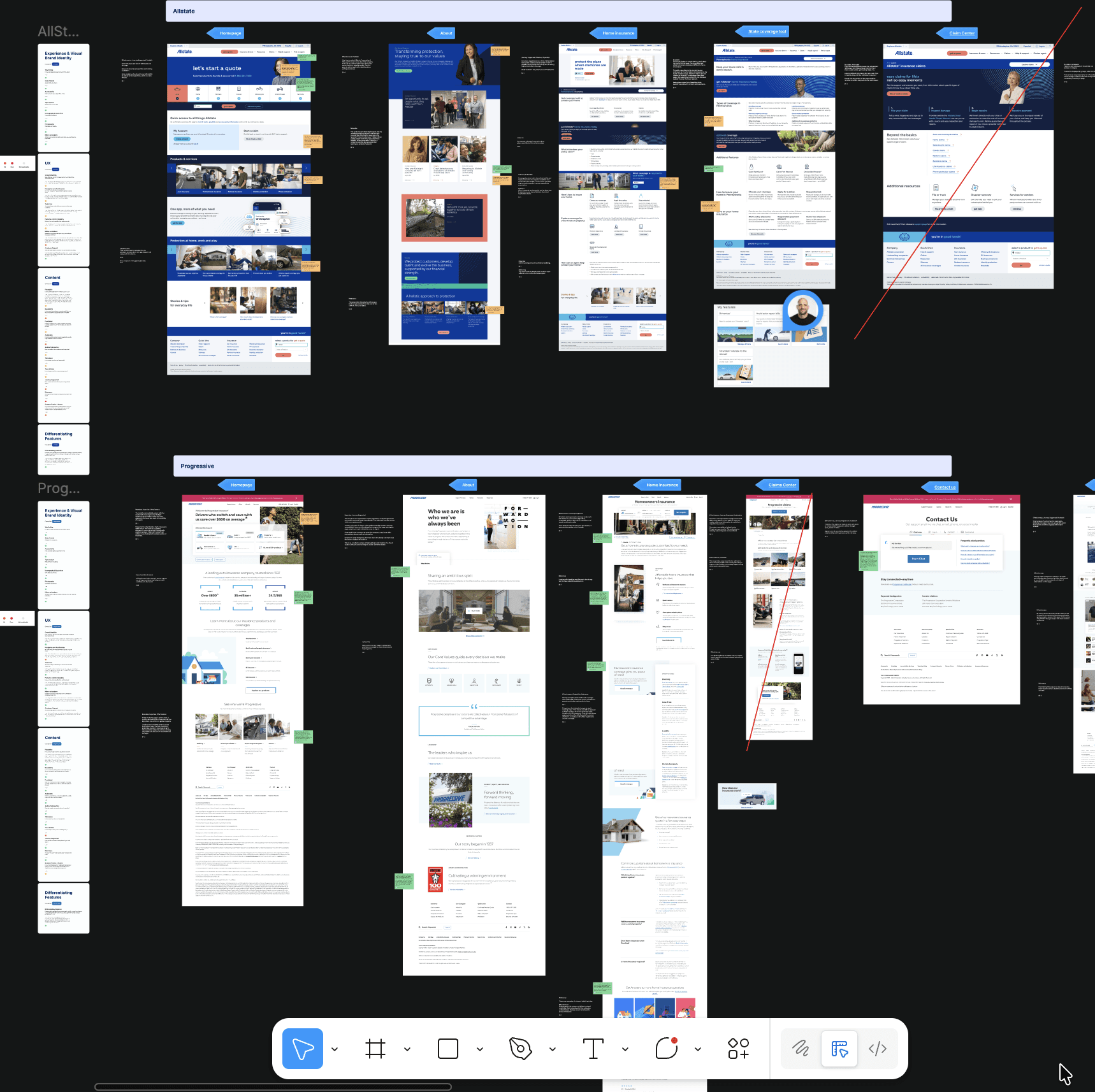
Each of the 11 websites (our client and 10 of their competitors) were evaluated independently across three tracks. Each discipline worked autonomously to avoid bias, while regular cross-team check-ins kept findings aligned as patterns emerged. The three tracks covered:
UX: examining navigation, task flows, information architecture, and overall usability
My focus was entirely on the UX track, auditing all 11 sites through the lens of user experience and usability best practices. For each site, the audit was structured around a consistent framework. Every website was broken down by page, and each page was evaluated across all three categories. This approach made it possible for me to:
Draw direct comparisons between competitors at a page level
Identify where the client was leading, meeting, or falling behind industry standards
Pinpoint specific UX patterns that were working well across the landscape
Surface clear opportunities for improvement with evidence to support them
These opportunities became the foundation for the final design: clearer user flows to reduce friction in the path to a quote, trust-building content placed at moments of hesitation, and navigation and layout patterns drawn directly from the best-in-class examples the audit uncovered.
Presentation
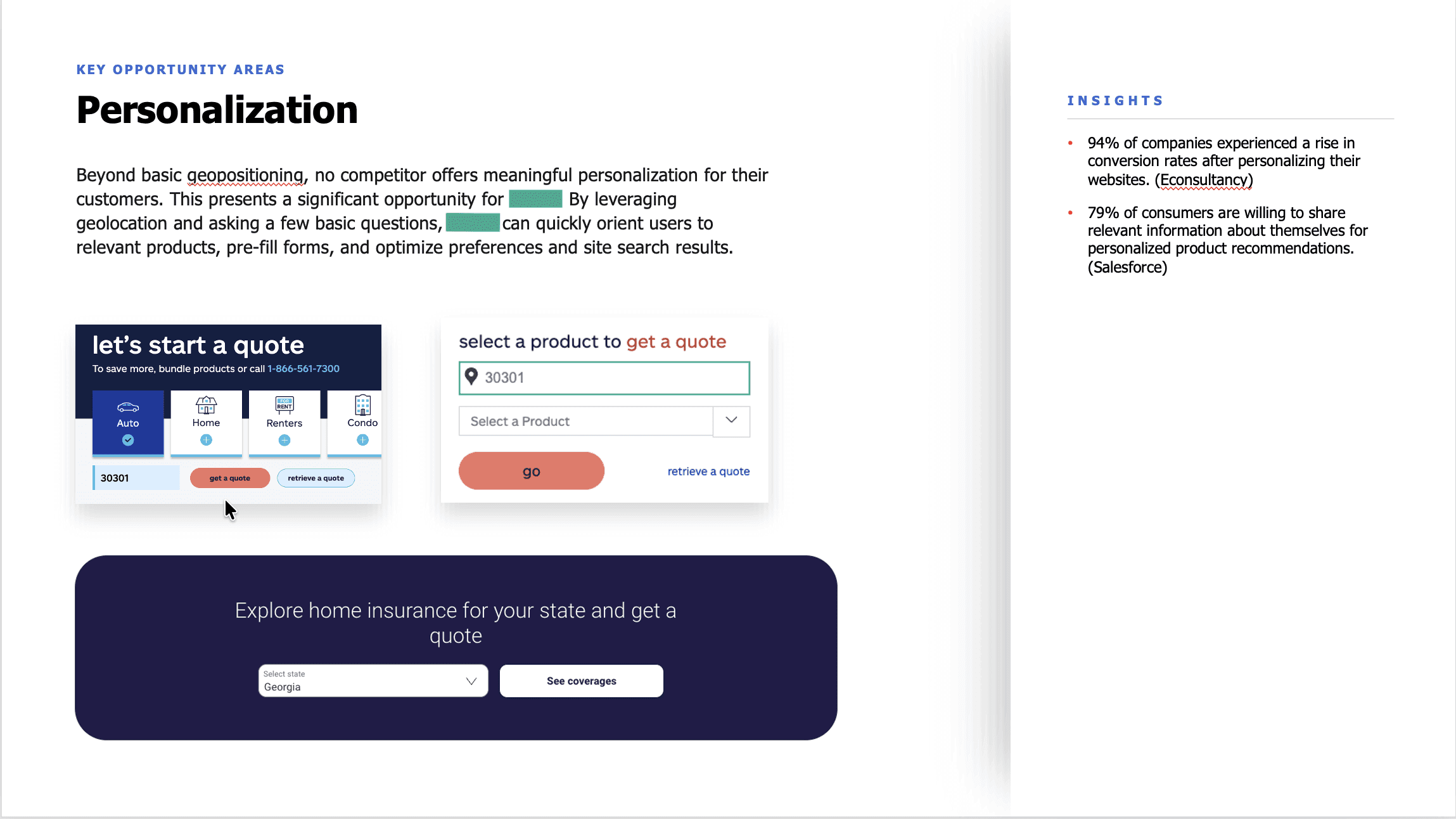
Once all three tracks were complete, the team combined findings into a single competitive analysis deck. I presented my UX findings to the internal team throughout the research process, and then co-presented the full deck to the client. The presentation was structured to tell a clear story, starting broad and then getting granular.
The deck was organized into the following sections:
Feature comparison
A side by side look at key features and capabilities across all 11 brands
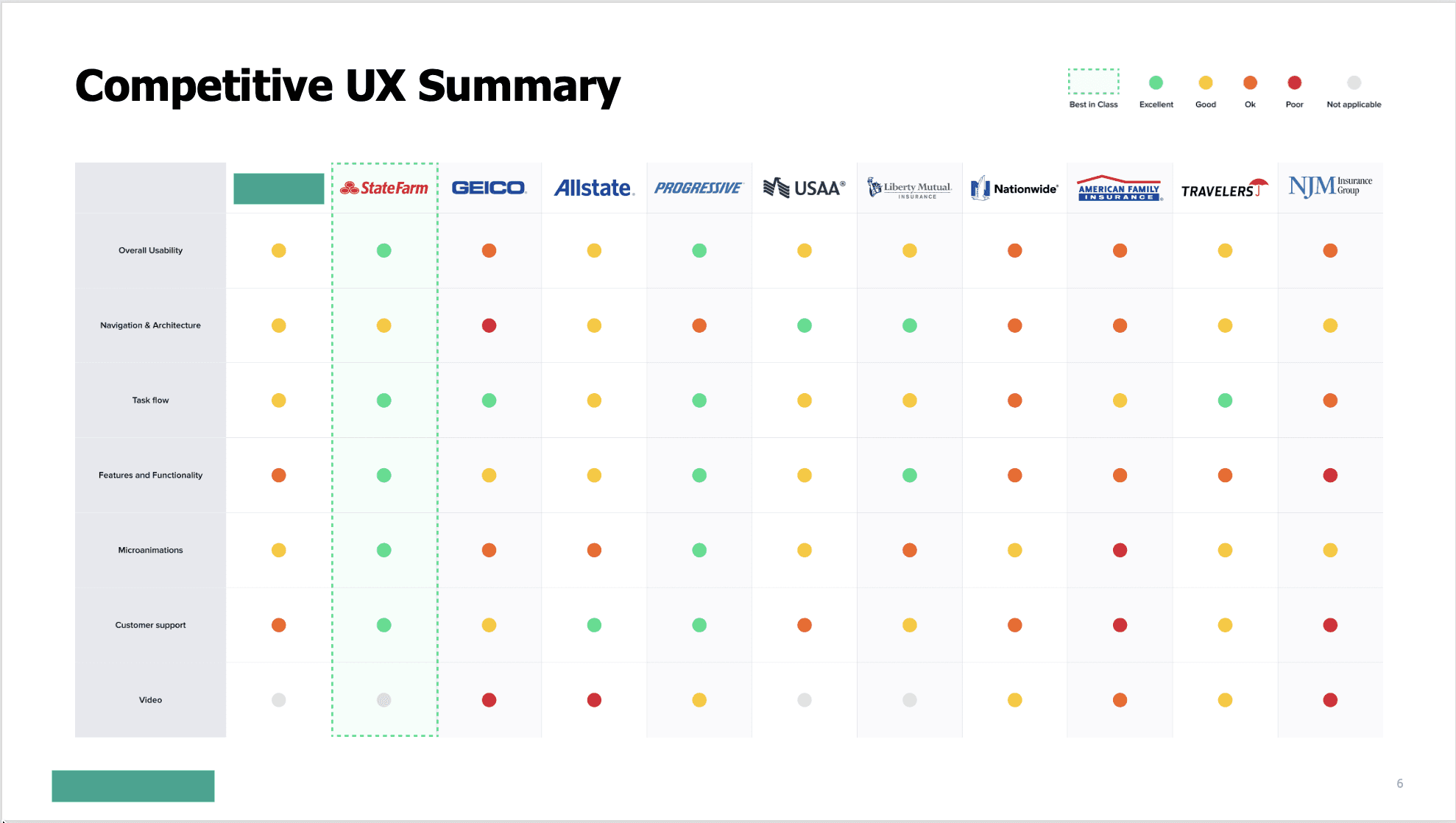
Competitive summary
High level overviews of Content, UI, and UX findings with best-in-class callouts for each
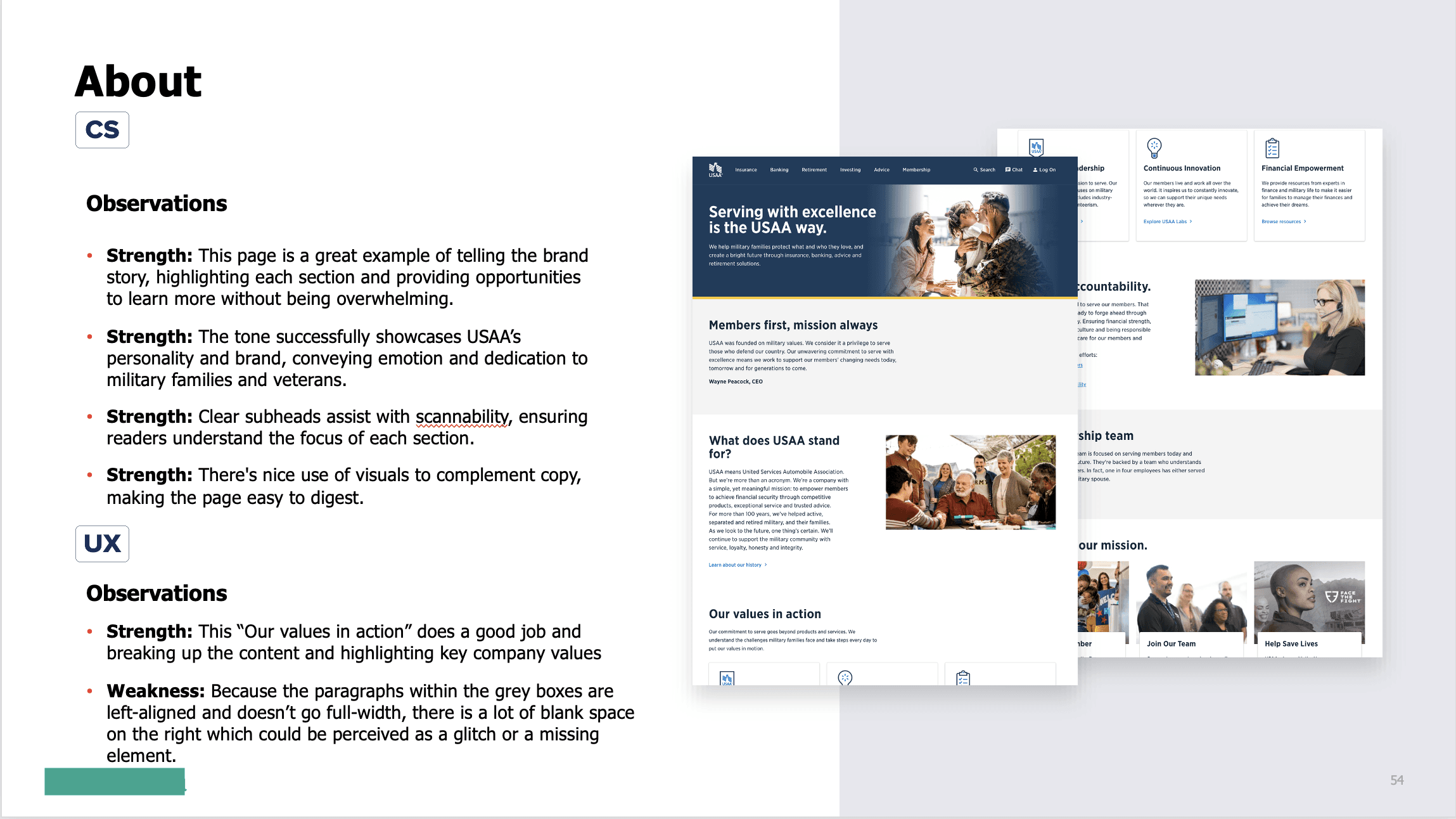
Company deep dives
Individual breakdowns for each site, organized by page and then by Content, UI, and UX, covering strengths, weaknesses, and standout moments
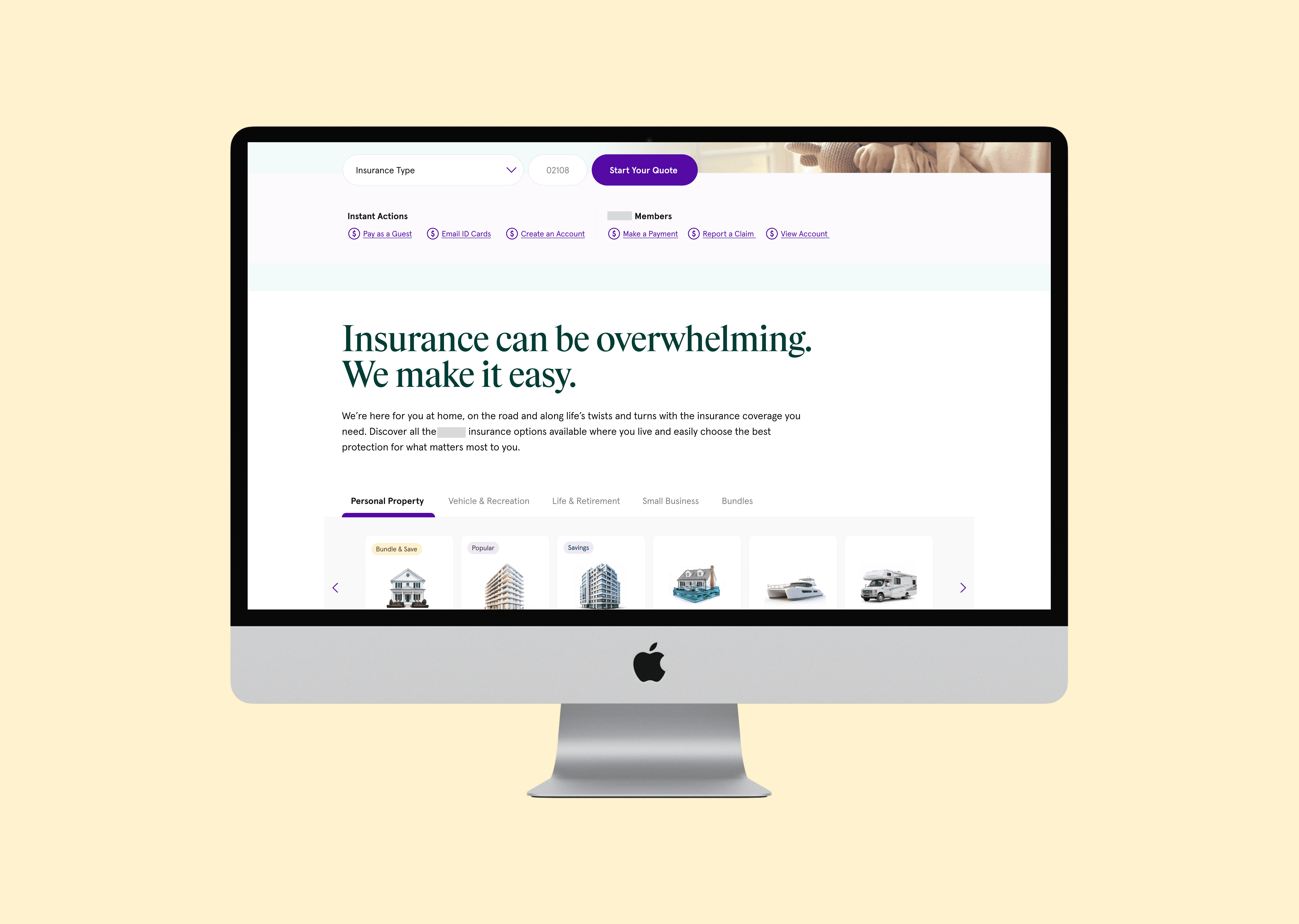
Design Process
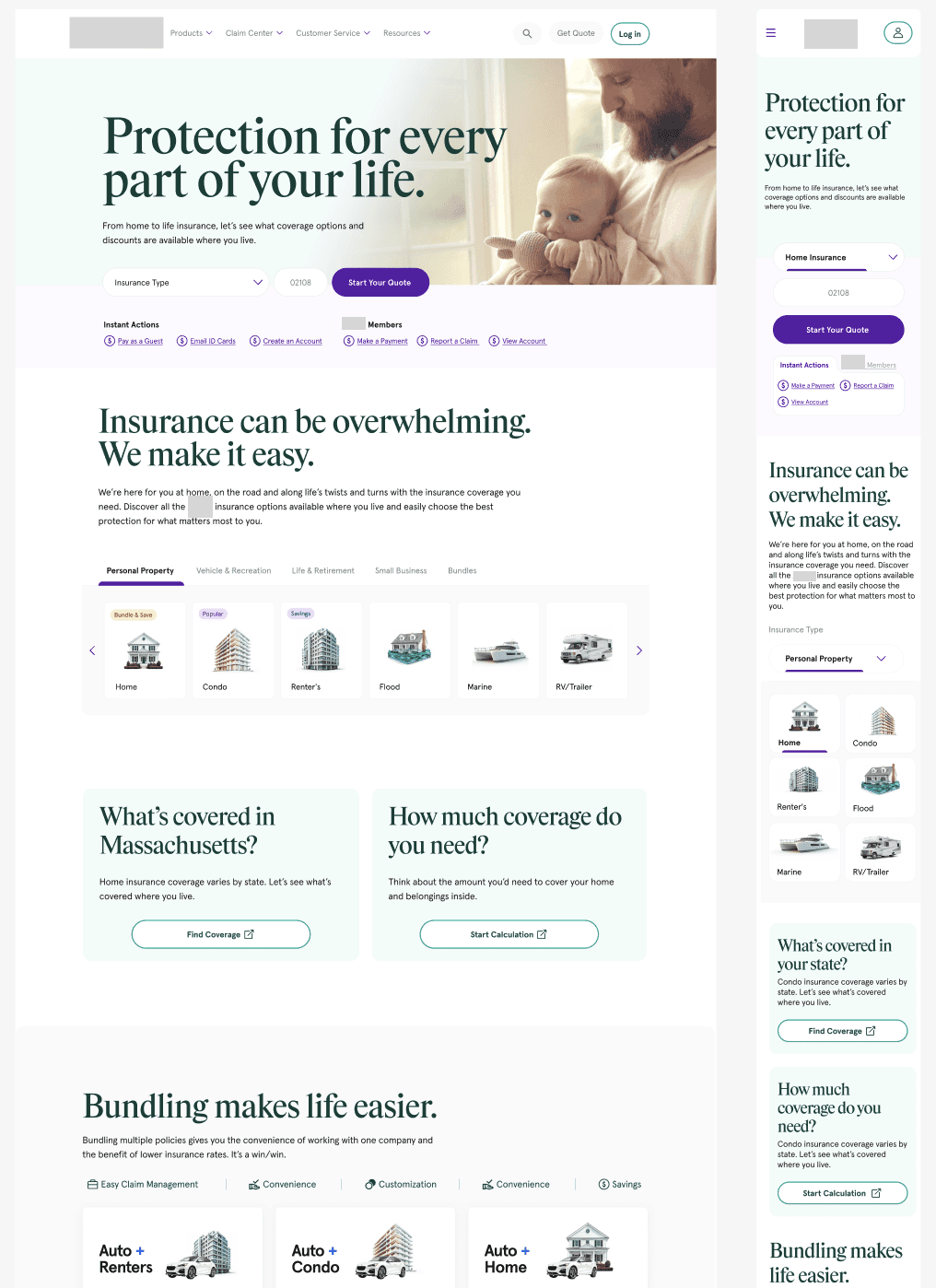
With the audit presented and priorities aligned, the team moved into design. The homepage was the natural starting point as it had the clearest gaps and the highest opportunity for impact. My design process followed a deliberate progression:
Low-fidelity wireframes
Establishing structure, hierarchy, and user flow based directly on UX audit findings
Collaborative reviews
Checking in with the UI designer and content strategist at key stages to ensure design decisions stayed grounded in research
Iterative refinement
Evolving layouts as UI and copy came together, adjusting the UX framework to support the full vision
The audit findings shaped specific design decisions throughout this phase. Areas where competitors consistently performed well informed the structural choices, and areas where the client was lagging became the clearest targets for improvement.


Final Designs
Reflection
This project reinforced for me how powerful it is to ground design in structured research and how much stronger that research becomes when it is cross-functional.
Key Takeaways
💡
Working in independent tracks before aligning as a team taught me that separating disciplines early produces more honest findings and a stronger synthesis.
💡
Sharing my UX findings throughout the process rather than waiting for a final reveal pushed me to articulate my reasoning earlier and helped sharpen our collective narrative before it reached the client.
💡
Research helps make design defensible. Every decision in the homepage redesign had a clear thread back to the audit, which gave the work credibility beyond aesthetics.